Are you building your startup without foundations?

Small guide on how to build a startup with a solid foundation. Part I: Common problems among hundreds of startups that have worked with Soluble.
At Soluble we work shoulder to shoulder with startups. It's our day-to-day and we've already done it with over 100 different startups. Their rhythms, timelines, and methodologies are very different from those of established companies, and this shapes how we work with them: you can't work properly with startups if your pace and methodology aren't startup-minded.
Over the years we've noticed certain recurring problems that show up again and again and that, over time, end up being decisive in the project's success or failure. Fortunately, these are problems with workable solutions. Let's take a closer look at all this.
This publication is the first part of a four-part series that compiles and expands on content from a talk that Ismael Barros and I have given at various events and spaces in the startup ecosystem.
In this first part I'll break down the different stages a startup goes through and what problems they may encounter if they haven't built on solid "foundations."
Startup phases
We like to see the different stages in a startup's progress as a building process. It's a metaphor that lets us match growth phases with different structures to identify the particulars and needs each one has. It's true that changes, advances, and iterations at emerging companies tend to be fast-moving, but we've managed to distinguish, roughly speaking, several phases based on their growth that correspond to the following structures.
Phase 1: the tent
The first step, the most exciting, but the one with the least infrastructure. Creators are concentrated and put all their focus and effort into validating the idea. A prototype is developed to show how the product could be and test the viability of the idea, and a business model hypothesis is proposed. Its founders are very excited, committed, and also broke, though that's not a brake.

Phase 2: the cabin
If the hypotheses were correct and the prototypes delivered promising results, a second growth phase kicks in. In the cabin, all focus is on developing the product until it can launch a first stable version that validates the business model. The founders are joined by a small technical team that enables development.

Phase 3: the small house
With a first stable version of the product and a business model that validates the initial hypothesis, focus now shifts to product-market fit and commercial launch. The startup begins to see its first profits. Marketing and content profiles join the founding and tech team.

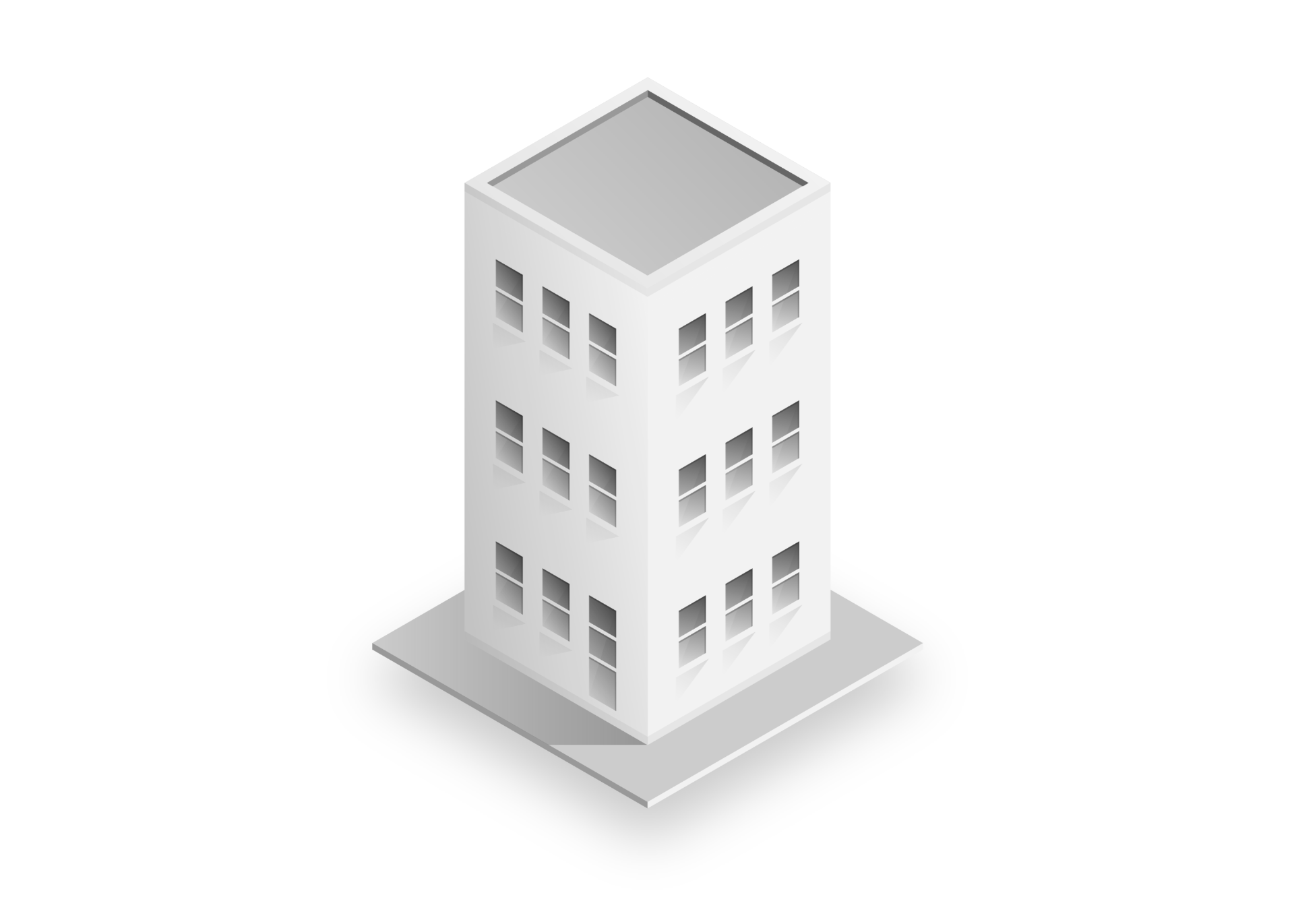
Phase 4: the building
The project grows and grows. Focus is now on scaling both profits and customers. With a validated and productive business model, the product is developed and iterated to scale profits. Finally, investment in marketing and the technical team is reinforced, and design profiles emerge.
Phase 5: the skyscraper
The final growth phase. The focus shifts to achieving higher profitability, expansion, and entering new markets. The effort goes into improving the product to support that expansion. There's positive cashflow and exponential team growth. Leadership begins to shift, with senior profiles leaving and new ones arriving, etc. This phase typically concludes in an IPO or acquisition by another company. What's known as an exit.

Growth without foundations
In each phase of a startup's development, focus is placed on whatever drives growth. The vision is to grow, scale, expand… which can often cause us to lose sight of the base, the groundedness, those foundations that allow you to weather the storms and prevent your building from shaking or even collapsing.
Over the years we've identified and helped solve some of these problems that startups face when they haven't properly laid the foundation for building their product. What are these problems? Let's get into it.
Lack of differentiation
Without differentiation, a product gets lost in the immensity of options. Usually there's more than one product in development solving the same problem: without differentiating factors, there's the risk of not being relevant to your audience.
A stronger player gets ahead of us
If your product is limited to a series of features, the moment a bigger competitor smells the business opportunity, they'll blow past you. Keeping Google (or similar) from eating your lunch isn't just a matter of functionality.
Your name doesn't work
Realizing that our name doesn't connect, isn't memorable, isn't aligned, or simply isn't euphonic when we're in advanced stages of our startup can undermine much of the work we've done.
Legal issues
Even if it's working, the name, identity, or design you created in a non-strategic way could cause you legal problems and bring the whole thing down.
They don't remember you
When your product is, or is very close to being, a commodity, the risk of being forgotten by the user or customer is very high. When a product isn't tied to attributes that transcend its functionality or service, it's neither relevant nor memorable beyond the moment of use or consumption.
Lack of attachment and commitment
To the lack of memorability is added the lack of attachment and commitment from users and customers toward the product. Users know the product, but there's nothing in it that makes them position it ahead of other competitors.
Lack of internal alignment
Not all problems come from *outside*. Building the product without having established proper foundations can cause the founding team itself to be misaligned on the startup's mission, leading to instability, delays, and failure.
High turnover of talent
Similarly, if we haven't properly laid the groundwork for our startup's strategy, new talent joining the project won't be properly aligned. This will cause the connection to the project to be fragile and talent will slip away.
Distrust
In a young, unknown product where there are more promises than proven facts, it's difficult to eliminate the barrier of distrust. And if the product focuses on a sensitive sector like finance, health, or strategic sectors like communications or energy, the risk that distrust becomes a brake on user acquisition is even greater.
Limitation to grow or simply survive
Each of these problems on its own might be manageable, but if they persist too long or occur simultaneously, they will halt the startup's progress or cause its collapse.
How do we grow with foundations?
If all these problems we've identified are attributable to a lack of foundation in our building/startup, what are those foundations really? From our experience, those foundations are the brand.
About the brand and how to work branding strategically to anchor our brand to the ground with the resources each phase needs, will speak Ismael Barros in the next installment of this series of posts.