Authentic brands for turbulent times
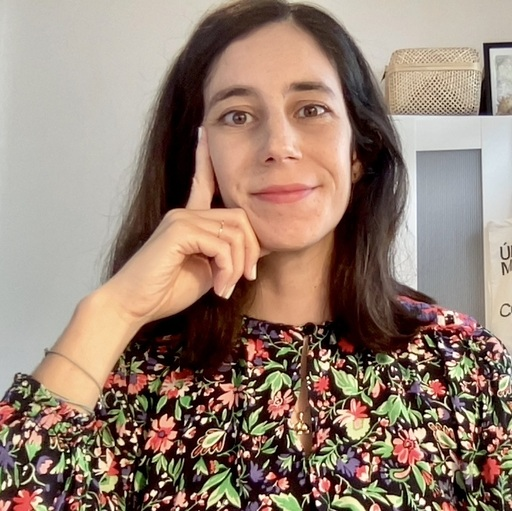
A month ago, Ismael, our CEO and cofounder, shared an important announcement with the team: Marta Factor was taking on the role of General Manager of Soluble, after nearly three years nurturing and adding value to the team and to our more-than-partners. Her intelligence, sensitivity, and "a voracious hunger to learn and do things right," as Ismael said when sharing the news on LinkedIn, are some of the reasons behind this evolution. But there's so much more.
We spoke with Marta about this new role from which, like a Brand Guardianship with special powers, she'll work to protect the essence of Soluble and of the brands that trust us. Let's start from the beginning.
Question. At this moment of change, let's look back. After 12 years in the world of communications, in September 2021 Soluble crossed your path. How was your match?
I had the intuition that it was an organization with which I shared a way of seeing things, and my conversations with Ismael before joining confirmed it—many more conversations than are typical in a hiring process. At that moment, what really caught my attention and made me believe in the project is how things are done at Soluble and why—that is, the purpose. In those first conversations I understood I was very aligned with it, with that interest in doing things right. That affinity is what led me to bet on Soluble.
Q. How have these nearly three years been?
I arrived as a project manager, which allowed me to contribute all my previous experience managing projects and teams. It's impossible to shake off so many years of communications experience, so I ended up taking projects beyond management, creating those opportunities to activate the brand. Very soon I start leading the creation of what is today the Activation area.
Almost two years later, with Activation already consolidated, Ismael, Laurent, and I set my next goal: moving into General Management. I always say that at Soluble nothing happens because of just one person, and this evolution is no exception. It's the sum of my actions, my decisions, my interactions with the founders and with everyone who has been and is at Soluble during this time. All of them have influenced who I am as General Manager right now.
Q. The first General Manager of a Soluble different from what it was when you arrived.
Soluble was born eight years ago in a startup ecosystem where flexibility and agility are key to survival, and that has permeated how it operates. That's why it's normal that the Soluble we know now isn't exactly the same as when I arrived, just as it won't be the same in a year. Throughout all these moments, Soluble has worked and endured because of that capacity to adapt, without losing sight of what we're pursuing, because that doesn't change.
Q. What challenges do you face in this new stage?
The fact that nothing at Soluble happens because of a single person isn't without its complexities. When you reach a level and you aspire to do big things, it starts to make sense that there are profiles dedicated to making sure everyone on the team has the information and tools they need and a clear, common goal, so their strength and energy focus on making it happen. Doing it, moreover, with all the values that matter to us, caring for professional and personal life. And that's my challenge. The balance between the professional and personal side, so they align with the aspiration. And when we all manage to have those elements I consider fundamental, Soluble will be closer to its purpose: making people happier in their work. And, of course, the brands we work with will also be closer to that.
Q. How does your relationship change and what's Ismael's role now that you're General Director?
In day-to-day operations, the boundaries are fuzzy. Often what happens isn't black or white, but there are many shades of gray. But I think we both have it clear that the focus is that I take care of the day-to-day running smoothly and that he centers his efforts on Soluble's future, to make it really happen. In some of our functions we're a duo, we add to each other, but each of us is clear about what our priorities and responsibilities are.

Q. In the way we work at Soluble, we seek balance between specialization and holistic vision. How do you achieve that balance as General Manager?
I start from a specialization that gives me a certain advantage to achieve the holistic view, which is specialization in communication. Understood not just as telling a story in words, but being able to understand complex realities and knowing how to connect from there with others to resolve that situation. For me, communication also has an important part that's engineering.
I'm aware that I can't create solutions alone. I need to establish connections with other people who know things I don't, and it's vital to find that common language to work together. If you're able to listen, understand each other, and communicate, everything becomes much easier.
Q. And how do we find this balance in the team?
The first thing any specialist working at Soluble needs to know is that we value enormously everything they know and can contribute, but we don't marry ourselves to any rule—not from branding, design, product, technology, or communication. We use everything we know as tools and we know which ones we need to use, which ones we don't, and which ones we need to acquire. There's a process of humility and detachment from what we believe we know, always staying open and letting ourselves be guided by that intuition and also by our teammates.
Q. What does all this mean for our more-than-partners?
Whether you're talking with Product or Technology or Strategy, we're going to speak your language.
Q. Another one of our focuses is continuous management. We seek to establish long-term relationships to accompany our partners in caring for their brand.
Nothing we do is flipping a switch, which is why we talk about brand building. Just like building a house isn't about hitting a button for "wall." There's a search for the location, some blueprints, construction planning… different phases that are carefully measured and synchronized so someone can move into that house. And once we're living in that house, one day leaks appear, or the family grows and we need to change a room… We have everyone capable of building that house or, dropping the metaphor now, of accompanying a brand. We want people to "live" in a brand that is welcoming, useful, comfortable, and accompanies them their whole life.
Q. Authenticity and continuous building are two keys to how we work on this, but how do we define branding?
It's everything we do to make sure a brand's image is what it needs to be. Branding is the message you put on social media, it's the experience on a website or in a store. Everything is branding. What you do and even what you don't do. Many brands do branding unconsciously because it's inevitable. Our job is to seize every opportunity, consistently and efficiently, so the brand generates the image we want—which is nothing more than looking as good as we actually are.
Q. Thinking about brand experiences, is there one you remember in a special way?
It sounds like I'm saying this for the interview, but I really mean it. The brand that's marked me most, and that I most love working with, is Soluble's brand. When I got to Soluble, Ismael would tell me "we don't tell even 10% of what we are and do," but day-to-day made it complicated. Activating it was a challenge we took on over a year ago and it's been like a gift. Obviously, we still don't do all the things I'd like, but I think we've managed to generate a network of genuine, authentic content that talks about us and our complexities and keeps expanding that initial percentage.
Q. In that Soluble Activation, and whenever we can, we talk a lot about purpose. How does our Making people happier at work get tangibilized?
Two angles come to mind. The first, in the specific work with brands, is to start from our authenticity, both with Soluble's own brand and with our partners' brands. It doesn't require as much effort, because having to pretend you're a brand you're not is exhausting and, unfortunately, very common. That exercise of embracing authenticity, of finding strengths and bringing them to the surface so they guide us—for me that's the first result that lets us get closer to being happier at work.
The other angle is more operational. Renunciations and decisions. Deciding that work won't give you happiness but it's fundamental that it doesn't take it away. That purpose, however nice it sounds, means renunciations. For example, saying no to projects that might be very tempting, but that aren't aligned with what we're looking for. Other concrete things: planning, remote work, the mood of everyone who makes up Soluble. Everything is taken into account when making decisions and knowing what renunciations we need to make.
Q. We work, and live, in a world of uncertainty, where everything changes very fast, especially in the digital space. What role can branding play in helping brands, and the people behind the brands, in this context?
In turbulent scenarios, we need the peace of mind that there are things that will never change. I use a device every day—the book—which stays almost the same as it was at its origin, many centuries ago. And it's a reminder that there are things that, if they're well made, won't need to change, even though there are always voices announcing an apocalyptic end of paper. It's something so well made that it's still here because it adds value. I think this applies to brands too. If there's really an essence that makes sense and adds value, is congruent and ethical, it's going to be able to be sustainable, evolve if it needs to, adapt, but the essential part will remain and endure. It's important not to lose that focus and that, no matter how much things change, we decide not to give up the essence, what brings us here. Having that purpose clear and maintaining a less short-term vision is what really helps us endure.
Q. And thinking about the people who are going to connect with our brand, what should we offer them in that brand experience to bring them value?
Transparency in the rational and honesty in the emotional. One emotion heavily worked in marketing is fear. Useful for a KPI? Maybe. For a brand? Never. Fear is short-term because in the West we're societies averse to fear. That's why, if a brand sends us a message rooted in fear, we might buy what it's offering in that moment, but our brain will quickly try to forget it.
Q. How would you like to see Soluble in three years? And how are you going to make that possible from the General Management?
I see it protecting its essence, above all else. I don't know what else will happen, what kind of clients we'll have, but that would be the goal for me: for Soluble to reach many more places, but for its essence to stay the same.
Q. Would you share a learning with us?
Nothing is that important.
Q. A piece of advice you've been given?
A colleague once told me: "let's start from the assumption that we're going to make mistakes." It helps me take the pressure off. I've always been very afraid of making mistakes and misunderstood perfectionism has hurt me. Now I keep it front and center—I'm going to mess up... and nothing will happen.
Q. And you, what advice would you give to someone starting out in the branding world?
Start by listening and don't take anything for granted. That's what we do in the immersion phase, which is a critical part of our work that doesn't get talked about much. Strategy comes later, and everything else, but immersion is fundamental. The ability to listen and prevent your biases or prior knowledge from muddying the reality of the brands that already exist, that are already there and already have it. The good in the brands we work with already exists, they already have it. Our job isn't to create it, but to find it, organize it, prioritize it, and capitalize on it. But it's there—we don't have to invent it.
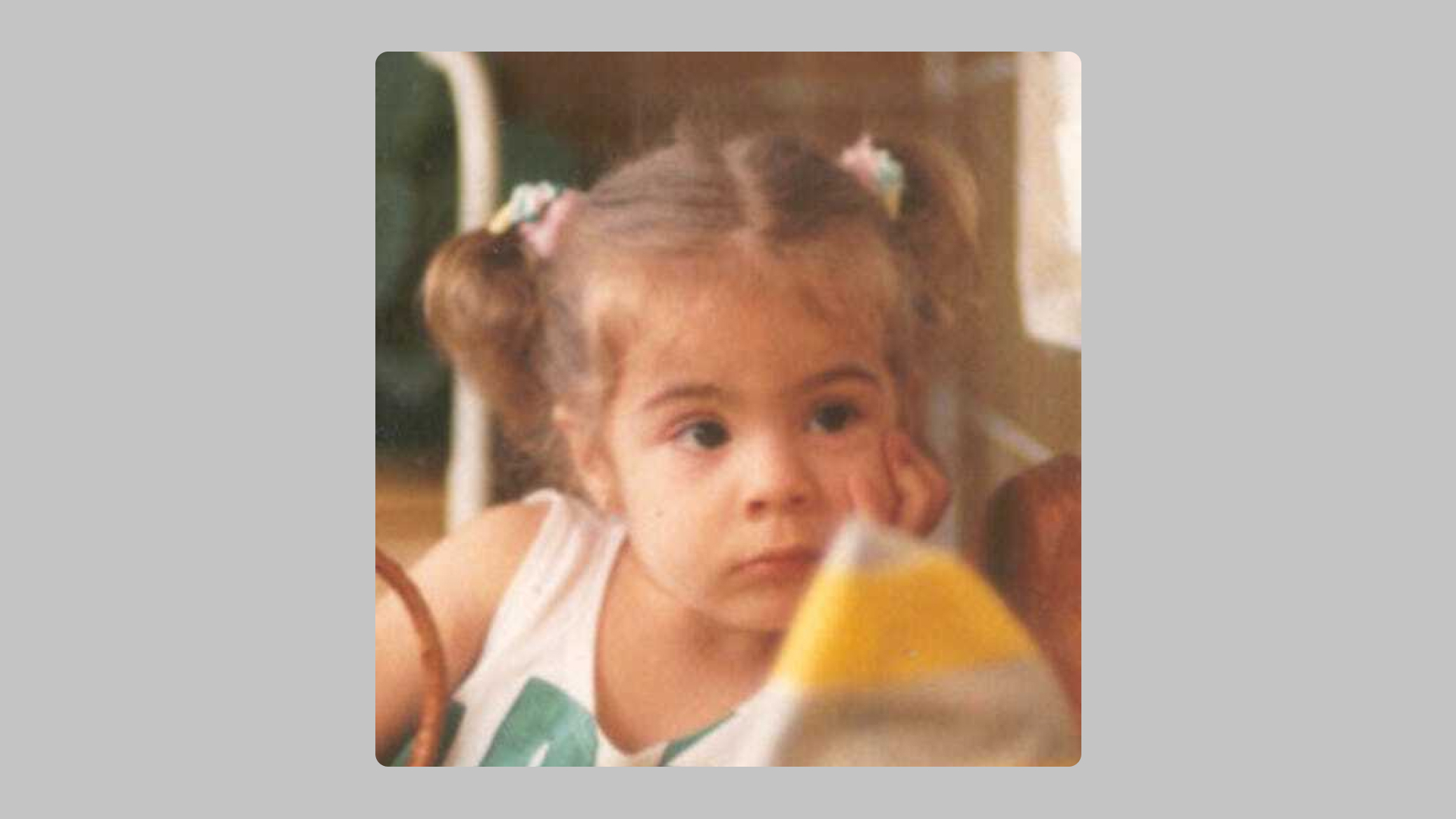
Q. What did you want to be as a child?
Well, many things. I wanted to be a teacher or a bookseller. I wanted to be the one from Telecinco who was holding the microphone on the news broadcasts. But my calling has always been to forge connections. With the world to understand it, with myself to know myself, and with people to understand each other mutually and achieve great things. I always had the intuition that alone, I couldn't.
Q. Reading has come up several times. What can you tell us about this passion of yours?
Oh, this whole thing about introducing yourself is very complex for me. For example, right now, if I say "I'm general manager of Soluble." A person is and does so many things that it's unreliable to sum it up in two or three words. The truth is I'm here because of a chain of consequences. The first of all is that I was an avid reader from age seven. That led me to make words my tool, that led me to commit to communication… We were talking earlier about essence. I've changed cities many times, I've changed roles, personal situations…, but for more than thirty years my passion for books hasn't changed. It's how I exist in the world. With books, I go from being a person with just two arms, two legs, finite time, to having the opportunity to live many lives, to know many places, to understand many experiences, and to make myself nearly infinite. And that sense of infinity is also what drives me to this role.
Q. And one last request: recommend us a book.
Infinite in a Reed, by Irene Vallejo. Because, beyond the many anecdotes and historical inspiration it contains, it reminds us again that essence doesn't get lost. There are things that endure over time, we all have them, and in turbulent times, you have to hold on to that.
Thank you, Marta, for sharing this conversation with us—one that has been, once again, infinite inspiration. Inspiration to keep doing branding with Soluble essence, so that authentic brands can travel, endure, through time and space. And us, by their side.